
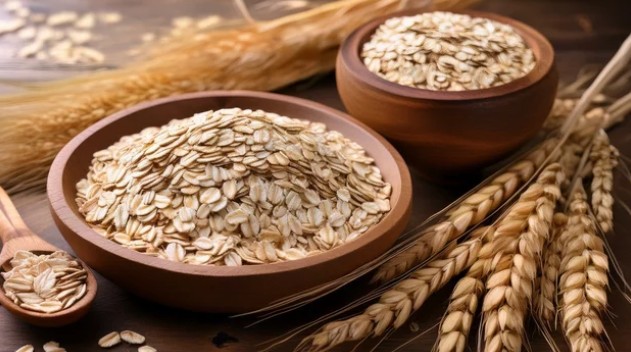
Oats
Gut-nourishing wholegrain that lowers cholesterol, stabilises blood sugar, and supports heart and metabolic health.Few foods are as universally celebrated as oats, which have earned a reputation as a wholesome, energising, and healing grain. Naturally rich in soluble fibre, vitamins, minerals, and powerful plant compounds, oats offer unique benefits for heart health, blood sugar regulation, digestive wellbeing, immunity, and metabolic balance.
Importantly, oats are among the most researched wholegrains in nutritional science—particularly for their role in lowering LDL cholesterol, nurturing the gut microbiome, and stabilising blood glucose. Their standout compound is β-glucan, a soluble fibre that forms a gel-like structure in the gut, slowing digestion and absorbing cholesterol-rich bile acids.
It’s also easy to include magical grain in daily meals—enjoyed as porridge, added to smoothies, baked into healthy snacks, or used as a gluten-friendly flour alternative. Affordable, versatile, and suitable for all ages, this is a foundational functional food for everyday health.
Nutrition Table
| Nutrient / Compound | Amount per 100g | Benefits |
|---|---|---|
| Energy | ≈ 1,628 kJ (389 kcal) | Sustained energy |
| Protein | 16.9 g | Supports muscle & satiety |
| Total Fibre | 10.6 g | Gut health & digestion |
| β-glucan | ≈ 4 g | Lowers cholesterol, stabilises glucose |
| Fat | 6.9 g | Healthy fats for heart and brain |
| Magnesium | 177 mg | Heart & muscle function |
| Iron | 4.7 mg | Supports oxygen delivery |
| Zinc | 4 mg | Immune function |
| Vitamin B1 (Thiamine) | 0.76 mg | Energy metabolism |
| Avenanthramides | Phytonutrients | Antioxidant and anti-inflammatory |
Benefits
- Supports Heart Health
Oats help lower LDL (“bad”) cholesterol and total cholesterol thanks to β-glucan, which traps cholesterol in the gut for excretion rather than absorption. Regular intake contributes to reduced cardiovascular disease risk.
- Balances Blood Sugar
The viscous fibre slows carbohydrate absorption, reducing blood glucose spikes and improving insulin sensitivity—beneficial for diabetes and metabolic syndrome.
- Nutures the Gut Microbiome
Oats feed beneficial gut bacteria, producing short-chain fatty acids (SCFAs) linked to reduced inflammation, better nutrient absorption, and immune support.
- Provides Lasting Energy
With slow-release carbohydrates, protein, healthy fats, and B-vitamins, oats support stable energy levels and healthy metabolism throughout the day.
- Anti-inflammatory and Antioxidant
Oats contain avenanthramides, a unique antioxidant group that reduces inflammation, supports vascular health, and promotes longevity.
- Supports Weight Management
High fibre increases satiety, helping regulate appetite naturally and also contributes to balancing hunger hormones.

How to Include Oats in Your Diet
Classic porridge with berries, cinnamon, and nuts
Soaked overnight in yoghurt or kefir makes it easier to digest and enhances nutrient absorption
Add it to smoothies for creaminess and fibre boost
Oat flour baking for healthier muffins, pancakes, and biscuits
Oat bran added to yoghurt or soups
Homemade granola (low sugar)
Snack bars with dried fruits
Processing notes for oats
Steel-cut – have the lowest glycaemic load.
Rolled – still provide excellent nutrition.
Instant variety – digest faster, but pair this with fat/protein to balance it out.
Overnight soaking can improve digestion and nutrient bioavailability.

Scientific Backing
Cholesterol-lowering
A meta-analysis in the American Journal of Clinical Nutrition found that 3 g/day of β-glucan from oats reduced LDL cholesterol by up to 10%, significantly lowering cardiovascular disease risk (Whitehead et al., 2014).
Blood sugar balance
A study in Nutrients reported improved insulin sensitivity and reduced post-meal glucose levels in type 2 diabetes patients given oat β-glucan (Zhang et al., 2021).
Gut microbiome
Oats increase beneficial bifidobacteria and short-chain fatty acids, according to research in the British Journal of Nutrition (Martinez et al., 2010).
Avenanthramides & inflammation
Avenanthramides were shown to reduce oxidative stress and improve vascular function (Chen et al., 2021).
Key Takeaways
Oats are one of the most evidence-backed functional foods for cardiometabolic health. With their unique β-glucan fibre, nutrient density, and anti-inflammatory compounds, oats support the heart, gut, immune system, and energy balance.
Whether enjoyed warm, cold, blended, or baked, incorporating oats daily is a simple and delicious step toward long-term wellness.
Recommended Products

References/Sources
USDA FoodData Central. (2024). Oats, raw.
U.S. Department of Agriculture, Agricultural Research Service.
https://fdc.nal.usda.gov/fdc-app.html#/food/170187
Whitehead, A., Beck, E. J., Tosh, S., & Wolever, T. M. (2014).
Cholesterol-lowering effects of oat β-glucan: A meta-analysis of randomised controlled trials.
American Journal of Clinical Nutrition, 100(6), 1413–1421.
https://doi.org/10.3945/ajcn.113.064113
Zhang, Z., Zhou, S., Jiang, X., Wang, Y., Ma, Y., & Li, S. (2021).
Effects of oat β-glucan on glycaemic control and insulin sensitivity in type 2 diabetes: A systematic review and meta-analysis.
Nutrients, 13(4), 1274.
https://www.mdpi.com/2072-6643/13/4/1274
Martínez, I., Kim, J., Duffy, P. R., Schlegel, V. L., & Walter, J. (2010).
Resistant starch and oat fibre supplementation alters the composition of the fecal microbiota in human subjects.
British Journal of Nutrition, 103(1), 82–90.
https://doi.org/10.1017/S0007114510000540
Chen, J., et al. (2021).
Avenanthramide-rich oats improve vascular function and reduce inflammation: A systematic review.
Frontiers in Nutrition, 8, 665055.
https://doi.org/10.3389/fnut.2021.665055
Li, W. (2024). Eat to Beat Disease: The New Science of How the Body Can Heal Itself.
Avery Publishing.