

Apples
An everyday fruit for heart, gut, and overall health.Apples (Malus domestica) are among the world’s most widely eaten fruits — and for good reason. They’re rich in fibre, vitamin C, and plant compounds that protect against oxidative stress and inflammation. Regular apple consumption has been linked to lower risks of heart disease, type 2 diabetes, obesity, and certain cancers.
Apples are nutrient-dense yet low in kilojoules, making them an easy, affordable, and portable snack that fits into nearly any healthy eating plan. Their benefits go beyond basic nutrition: apples act as a functional food, providing biologically active compounds such as polyphenols that influence gut health, blood sugar control, and immune response. Research has shown that the highest quantities of polyphenols are found in the Granny Smith, Red Delicious and Reinette varieties.
Nutrition Table
| Nutrient / Compound | Amount per 100g | Benefits |
|---|---|---|
| Energy | 218 kJ (52 kcal) | Provides natural energy |
| Water | 85.6 g | Hydration and cell function |
| Protein | 0.3 g | Supports tissue repair |
| Total Fat | 0.2 g | Very low in fat |
| Carbohydrates | 13.8 g | Provides slow-release energy |
| Sugars | 10.4 g | Natural sweetness, quick energy |
| Dietary Fibre | 2.4 g | Promotes gut health and fullness |
| Sodium | 1 mg | Very low in sodium |
| Potassium | 107 mg | Regulates blood pressure and fluid balance |
| Calcium | 6 mg | Supports bone health |
| Magnesium | 5 mg | Aids muscle and nerve function |
| Phosphorus | 11 mg | Bone and energy metabolism |
| Iron | 0.1 mg | Essential for oxygen transport |
| Zinc | 0.04 mg | Supports immunity and wound healing |
| Copper | 0.03 mg | Aids red blood cell formation |
| Manganese | 0.035 mg | Antioxidant enzyme support |
| Vitamin C | 4.6 mg | Antioxidant, supports immunity |
| Vitamin A | 54 IU | Supports vision and immune function |
| Vitamin K | 2.2 µg | Aids blood clotting and bone health |
| Vitamin E | 0.18 mg | Protects cells from oxidative damage |
| Vitamin B1 (Thiamine) | 0.017 mg | Helps convert food into energy |
| Vitamin B2 (Riboflavin) | 0.026 mg | Energy metabolism and skin health |
| Vitamin B6 | 0.041 mg | Supports brain and immune function |
| Folate (B9) | 3 µg | Cell growth and DNA synthesis |
| Choline | 3.4 mg | Supports brain and liver health |
| Polyphenols (Quercetin, Catechins, Chlorogenic acid) | 200–400 mg | Powerful antioxidant and anti-inflammatory compounds |
| Flavonoids | 100–150 mg | Protects cells and supports vascular health |
Benefits
- Heart and Vascular Health
Apples are a rich source of soluble fibre — mainly pectin — which binds to cholesterol in the gut and helps lower “bad” LDL cholesterol. Their polyphenols, particularly flavonoids like quercetin and epicatechin, improve blood vessel function and reduce oxidative stress, supporting healthy circulation and blood pressure.
- Blood Sugar Control
Despite their natural sweetness, apples have a relatively low glycaemic index. Their fibre slows sugar absorption, helping regulate blood glucose levels. Regular intake is associated with reduced risk of type 2 diabetes — partly due to improved insulin sensitivity and antioxidant activity of apple polyphenols.
- Gut Health
The pectin in apples acts as a prebiotic, nourishing beneficial gut bacteria such as Bifidobacterium and Lactobacillus. These microbes produce short-chain fatty acids (SCFAs) like butyrate, which support the intestinal lining and reduce inflammation throughout the body.
- Weight Management
Apples promote fullness and reduce total energy intake thanks to their water and fibre content. Studies show that adding an apple before a meal can help with appetite control and modest weight reduction over time.
- Cellular Protection
Apples are abundant in antioxidants — vitamin C, quercetin, catechins, and chlorogenic acid — that neutralise free radicals. These compounds help slow oxidative damage to cells, potentially reducing long-term risks of chronic conditions such as cardiovascular disease and some cancers.
How to Include Apples in Your Diet
- Eat them whole (with skin).
The skin contains most of the fibre and up to two-thirds of the antioxidants — so don’t peel unless necessary. Simply rinse well. - Combine with protein or healthy fats.
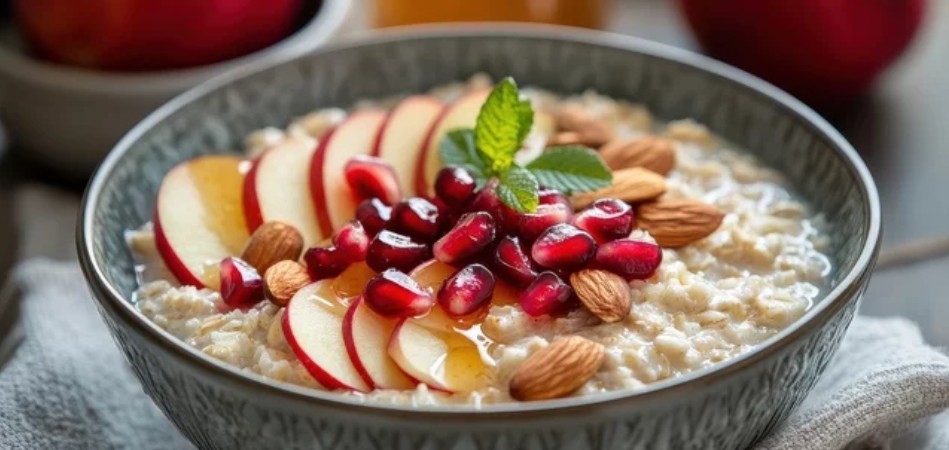
Pair apple slices with nut butter or yoghurt for balanced blood sugar control and better satiety. - Add to porridge, salads, or baked dishes.
Apples add natural sweetness and moisture without refined sugar. Try grated apple in oats, thin slices in salads with walnuts, or baked halves sprinkled with cinnamon. - Consider variety.
Red apples (like Gala or Fuji) tend to have higher anthocyanin content, while green varieties (like Granny Smith) offer more malic acid and slightly less sugar. Mix types for a wider nutrient range. - Processing effects.
Drying, juicing, or long storage lowers vitamin C content and removes some fibre. Apple juice retains polyphenols but raises the glycaemic load, while apple purée and stewed apples maintain pectin if not overcooked. Light steaming or slow baking preserves most beneficial compounds.

Scientific Backing
Heart Health
A review of controlled clinical studies (2020, Critical Reviews in Food Science and Nutrition) found that daily consumption of whole apples or apple polyphenol extracts significantly lowered total cholesterol and LDL cholesterol in adults. In one 12-week trial of post-menopausal women, eating 340 g of apples per day (roughly two medium fruits) reduced LDL by 0.23 mmol/L compared with dried fruit controls. Researchers attribute this to apple pectin binding cholesterol and to flavonoids improving lipid metabolism.
Blood Sugar Regulation
A 2023 meta-analysis covering over 340,000 participants found that people who ate at least one apple a day had a 9–12% lower risk of developing type 2 diabetes. Mechanistically, the polyphenol phloridzin slows intestinal glucose uptake, while soluble fibre enhances insulin sensitivity. Apples also increase antioxidant enzyme activity, which protects pancreatic cells from oxidative damage.
Gut Microbiota
Eight human intervention trials have shown that apple pectin and polyphenols increase populations of beneficial bacteria, leading to higher production of SCFAs such as butyrate. One 4-week crossover study of 23 adults found that daily apple intake (about 240 g) increased Bifidobacterium abundance by 17% and improved faecal SCFA concentrations, markers of better gut health.
Weight Management
In a 10-week study comparing snacks, women who ate one apple (≈95 kcal) before meals lost 0.84 kg more weight than those given calorie-matched oat biscuits. The fibre and water increased satiety, while the chewiness slowed eating rate, resulting in lower total energy intake.
Cellular and Antioxidant Protection
A 2022 clinical trial measured oxidative stress markers in healthy adults. After four weeks of daily apple consumption, participants had significantly lower plasma malondialdehyde (a lipid-peroxidation marker) and higher antioxidant enzyme levels (superoxide dismutase and glutathione peroxidase). Another laboratory study found apple skin extracts inhibited free-radical formation more effectively than vitamin C alone, underlining the role of skin polyphenols.
Cancer and Longevity Associations
Epidemiological evidence continues to link frequent apple consumption with lower risks of certain cancers. A 2021 cohort study involving 470,000 Europeans (EPIC study) found that those eating apples at least three times weekly had a 12% lower incidence of colorectal cancer. Researchers credit a combination of fibre-related gut protection, antioxidant effects, and reduced inflammation. Dr William Li’s Eat to Beat Disease cites two further clinical epidemiological studies, the EPIC and NIH-AARP Diet and Healthy Study, which concluded that to apples per day were associated with a 10% risk reduction in bladder cancer, a 20% risk reduction in colon cancer, and an 18% risk reduction in lung cancer.
Key Takeaways
Apples provide a unique mix of fibre, vitamin C, potassium, and polyphenols that support heart, gut, and metabolic health.
Eating apples regularly may help lower cholesterol, stabilise blood sugar, and aid weight management. The majority of beneficial compounds are found in the skin, so eat apples unpeeled when possible.
Choose whole apples over juice for maximum fibre and lower sugar impact.
Simple daily inclusion — one medium apple — can make a measurable difference in health markers.
Recommended Products

References/Sources
-
U.S. Department of Agriculture, FoodData Central: Apples, raw, with skin (2024 update).
https://fdc.nal.usda.gov/fdc-app.html#/food-details/09003 -
Boyer J., & Liu R.H. (2004). Apple phytochemicals and their health benefits. Nutrition Journal, 3:5.
https://nutritionj.biomedcentral.com/articles/10.1186/1475-2891-3-5 -
Muraki I., et al. (2013). Fruit consumption and risk of type 2 diabetes: results from the BMJ.
https://www.bmj.com/content/347/bmj.f5001 -
de Farias L.M., et al. (2023). Effect of chronic apple consumption (Malus domestica Borkh.) on the lipid profile of adults with dyslipidaemia: a systematic review. Explor Foods Foodomics.
https://doi.org/10.37349/eff.2023.00022