
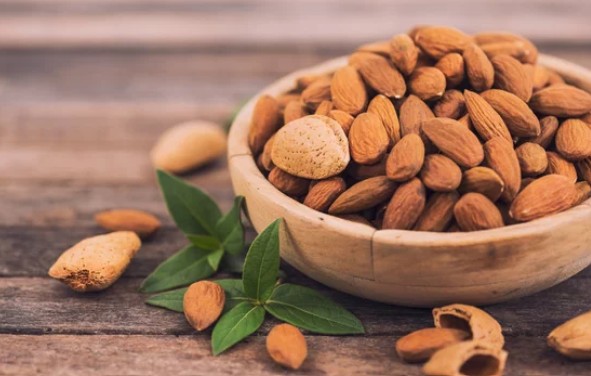
Almonds
A nutrient-dense powerhouse for heart, brain, and metabolic health.Almonds, biologically known as Prunus Dulcis, have earned their reputation as one of nature’s most nutrient-dense foods — a small handful delivers an impressive combination of healthy fats, high-quality plant protein, fibre, and essential vitamins and minerals. Almonds are recognised for their role in supporting heart health, metabolic balance, and overall vitality. Within them lies a complex array of phytonutrients and antioxidants that contribute to cell protection, hormone regulation, and even gut health. Modern nutritional science, including the work of Dr William Li in Eat to Beat Disease, highlights almonds as a functional food capable of nourishing the body’s natural defence systems while adding flavour and texture to everyday meals.
Nutrition Table
|
Nutrient/Compound |
Amount per 100 g |
Notes |
|
Energy |
579 kcal (2,420 kJ) |
High-energy food rich in healthy fats |
|
Protein |
21 g |
High-quality plant protein |
|
Total Fat |
50 g |
Mostly monounsaturated |
|
— Monounsaturated fat |
31 g |
Heart-healthy |
|
Carbohydrates |
22 g |
Includes natural sugars and fibre |
|
— Dietary fibre |
12 g |
Promotes gut health |
|
Vitamin E (α-tocopherol) |
25.6 mg (> 100 % DV) |
Potent antioxidant |
|
Magnesium |
270 mg |
Supports muscle & nerve function |
|
Calcium |
264 mg |
Important for bone health |
|
Phosphorus |
484 mg |
Energy metabolism & bone structure |
|
Potassium |
705 mg |
Helps regulate blood pressure |
|
Iron |
3.7 mg |
Oxygen transport in blood |
|
Phytonutrients / Bioactives |
Flavonoids, phenolic acids, phytosterols |
Antioxidant & anti-inflammatory compounds |
Almond Benefits
- Heart Health and Cholesterol Balance
Almonds are well known for their ability to promote cardiovascular health. Their monounsaturated fats — the same “good” fats found in olive oil — help maintain healthy cholesterol levels by lowering LDL (bad) cholesterol and preserving HDL (good) cholesterol. Their high vitamin E content acts as a potent antioxidant, protecting blood vessels from oxidative damage. Several studies, including one published in the Journal of Nutrition (2017), have shown that regular almond consumption can significantly reduce total cholesterol and improve lipid profiles in adults with elevated cholesterol levels. Their healthy fats, fibre, and plant compounds improve blood vessel function and reduce inflammation.
- Blood Sugar Regulation
Despite being energy-dense, almonds have a low glycaemic index and play a valuable role in stabilising blood sugar. The combination of fibre, protein, and healthy fats slows glucose absorption, reducing spikes after meals. A clinical study in Metabolism: Clinical and Experimental (2011) demonstrated that eating almonds alongside carbohydrate-rich foods can lower postprandial glucose and insulin levels. This makes them a particularly smart snack for individuals with insulin resistance or type 2 diabetes.
- Gut Health and the Microbiome
Almonds are rich in prebiotic fibre, which supports the diversity and growth of beneficial gut bacteria such as Bifidobacterium and Lactobacillus. The polyphenols in almond skins also act as antioxidants that feed and protect these microbes. A 2016 study published in Frontiers in Microbiology found that daily almond consumption increased populations of healthy gut bacteria, which may contribute to improved digestion, immune resilience, and reduced inflammation.
- Skin and Cellular Health
The vitamin E and flavonoid compounds in almonds contribute to skin elasticity and protection from UV-induced damage. Vitamin E, in particular, helps maintain the integrity of cell membranes and slows oxidative stress that accelerates ageing. A 2021 randomised controlled trial in Phytotherapy Research found that women who consumed almonds daily showed a measurable reduction in wrinkle severity and improved skin tone — suggesting that they may support skin health from within.
- Weight Management and Satiety
Although calorie-dense, almonds can aid in weight control when eaten in moderation. Their combination of protein, fibre, and fat enhances satiety, helping reduce overall calorie intake. This supports their role as a satisfying and nutrient-rich alternative to processed foods.
- Antioxidant and Anti-Inflammatory Effects
The skin of almonds contains flavonoids and phenolic acids, which act as antioxidants and help reduce oxidative stress. Their Vitamin E content is a potent lipid-soluble antioxidant, protecting cell membranes from peroxidation. These antioxidant actions may contribute to lowering chronic inflammation, a known factor in many diseases.
- Bone & Mineral Health
Almonds supply calcium, magnesium, phosphorus, and trace copper, all of which are important for bone mineralisation and structure. Over time, their magnesium and calcium, in particular, support bone health when part of a balanced diet.

How to Include Almonds in Your Diet
- Start simple: Aim for 1-2 handfuls daily as a snack to reap benefits without overdoing calories. Always choose unsalted varieties to keep sodium low.
- Pre-meal snack: Eat 10–15 almonds 30 minutes before carbohydrate-rich meals to blunt glucose spikes.
- Raw or lightly roasted: Keep nuts unsalted and avoid high-heat roasting to preserve more phytonutrients.
- Almond milk and butter: Use unsweetened versions to replace dairy milk or spreads, but note that the protein and fibre content is lower than the whole nut version. Dunk fruit slices into almond butter or use it as a spread on wholegrain toast.
- Add to meals: Sprinkle over salads, porridge, smoothies, or baked goods.
- Almond flour: Substitute a portion of wheat flour in baking to boost nutrition and flavour.
- Pairings: Pair almonds with vitamin C–rich fruits (e.g. berries, citrus) to help recycle antioxidants. Use with leafy greens and seeds to build mineral synergy.
- Trail mix: Mix the nuts with dried fruits and seeds for a portable, diabetes-friendly boost.

Scientific Backing
Heart Health
A large analysis combining results from 18 controlled studies (with 837 participants) found that eating almonds every day helped lower “bad” LDL cholesterol, total cholesterol, and blood triglycerides. The strongest effects were seen in people eating more than 40 grams of almonds a day (around a small handful and a half). In another 12-week study of people with metabolic syndrome, those who ate about 55 grams of almonds daily had a reduction in LDL cholesterol of about 0.22 mmol/L and lost roughly 3 cm around the waist compared with those who ate a similar amount of crackers.
Weight Management
A review of 64 clinical trials found that regular almond eaters lost an average of about 0.36 kg in body weight and 0.59 kg of body fat compared with people who didn’t eat almonds. The benefits were greatest in studies lasting six weeks or longer, with at least 40 grams per day. Scientists think this effect happens partly because not all almond fat is absorbed by the body — up to 25% passes through — and because almonds help control hunger, making people feel full for longer.
Gut Health
Eight human studies have shown that almonds can improve gut health by increasing the diversity of gut microbes and boosting populations of beneficial bacteria such as Bifidobacterium and Lactobacillus. These bacteria produce short-chain fatty acids (SCFAs), which are compounds that support the gut lining, help reduce inflammation, and contribute to better metabolic health.
Protection Against Oxidative Stress
A 2025 review of eight clinical trials found that eating more than 55 grams of almonds a day helped reduce several markers of oxidative stress — the process that can damage cells and speed up ageing. Participants showed lower levels of malondialdehyde (a marker of lipid damage) by about 0.46 micromoles per litre, uric acid by 0.04 mmol/L, and DNA damage marker 8-OHdG by 5.8 nanograms per millilitre. Almond consumption also increased antioxidant enzyme activity, suggesting better protection against cell damage.
Key Takeaways
Almonds are far more than a nutritious snack — they’re a compact powerhouse of essential nutrients and protective compounds that support multiple systems within the body. From promoting cardiovascular health and stabilising blood sugar to nurturing a diverse gut microbiome and maintaining radiant skin, almonds earn their place as one of the most functional foods available.
Regular consumption — even a small handful (about 30g) a day — can deliver measurable health benefits without compromising calorie balance. Their blend of healthy fats, plant protein, fibre, and phytonutrients contributes to better metabolic control, improved digestion, and long-term resilience against chronic disease.
As Dr William Li notes in Eat to Beat Disease, the right foods can activate the body’s natural defence systems and enhance overall wellbeing. Whether sprinkled over breakfast oats, blended into smoothies, or enjoyed raw as a mid-afternoon snack, almonds make an easy and delicious addition to any balanced diet — proof that small daily choices can have lasting impact on health and vitality.
Recommended Products

References/Sources
- Harvard T.H. Chan School of Public Health. (n.d.). Almonds. The Nutrition Source. https://nutritionsource.hsph.harvard.edu/food-features/almonds/
- Almond Board of California. (2021). State of the Science: Almonds and Heart Health. https://www.almonds.com/sites/default/files/2021-12/State%20of%20the%20Science%202021.pdf
- Hodgson, J. M., et al. (2025). Daily almond snack improves health of people with metabolic syndrome. Nutrition Research. https://news.oregonstate.edu/news/daily-almond-snack-improves-health-people-metabolic-syndrome
- Yake, M. R., et al. (2021). A Comprehensive Review of Almond Clinical Trials on Weight Measures… Nutrients, 13(6), 1959. https://pmc.ncbi.nlm.nih.gov/articles/PMC8229803/
- Barreca, D., et al. (2020). Almonds (Prunus Dulcis Mill. D. A. Webb): A Source of Nutrients… Nutrients, 12(3), 672. https://pmc.ncbi.nlm.nih.gov/articles/PMC7146189/
- Asbaghi, O., et al. (2025). The impact of almond supplementation on oxidative stress biomarkers… Scientific Reports, 15, 14701. https://www.nature.com/articles/s41598-025-14701-w