
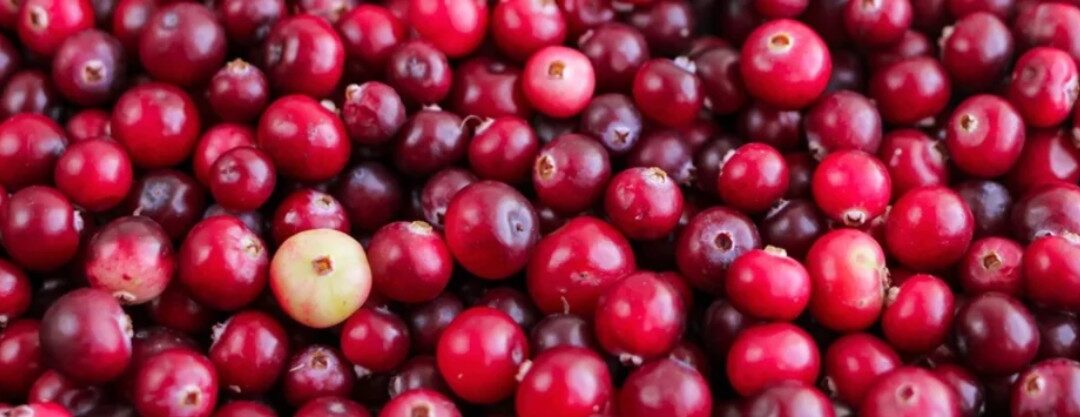
Cranberries
Rich in antioxidants, urinary-tract support, heart-healthy polyphenols and immune-boosting nutrients.Cranberries (Vaccinium oxycoccos or Oxycoccus palustris) are small, tart berries celebrated not only for their culinary uses but also for their potent nutritional and medicinal properties. Historically consumed by Native American cultures for wound care, digestive health and infection prevention, they are now widely recognised for their role in supporting urinary tract health, cardiovascular function, immune protection and gut wellbeing.
Packed with polyphenols such as proanthocyanidins (PACs), flavonols, and phenolic acids, these berries offer a powerful antioxidant and anti-inflammatory profile. They are especially well-studied for reducing the risk of urinary tract infections (UTIs) by preventing harmful bacteria from adhering to the urinary tract wall — a mechanism demonstrated in both laboratory and human studies.
With only 46 kcal per 100g and an impressive blend of vitamins, fibre and bioactive compounds, cranberries are a functional food with broad health benefits, making them a valuable addition to a balanced diet.
Nutrition Table
| Nutrient/Compound | Amount per 100g | Benefits |
|---|---|---|
| Energy | 46 kcal | Low-calorie fruit |
| Fibre | 3.6 g | Supports digestion and gut health |
| Vitamin C | 14 mg | Boosts immunity and protects cells |
| Vitamin E | 1.2 mg | Antioxidant benefits |
| Vitamin K | 5.1 µg | Supports blood and bone health |
| Proanthocyanidins (PACs) | Varies (avg ~150 mg in 100g fresh) | Prevents bacterial adhesion, antioxidant |
| Flavonols and Phenolic Acids | Present | Anti-inflammatory and vascular benefits |
Benefits
- Supports Urinary Tract Health
Cranberries contain unique A-type proanthocyanidins (PACs) that prevent Escherichia coli from sticking to the urinary tract lining — helping reduce recurrent urinary tract infections, especially in women.
- Promotes Heart Health
Because they contain plenty of polyphenols and potassium, they have been shown to improve cholesterol profiles, reduce oxidative stress and support healthy blood pressure.
- Anti-Inflammatory and Antioxidant Properties
The berry’s high antioxidant capacity may help neutralise free radicals, reducing cellular damage and systemic inflammation associated with chronic disease.
- Antiangiogenic Defences
These berries contain potent bioactives like ellagic acid and anthocyanins, both of which have antiangiogenic activity, and are linked to lower cancer risk.
- Supports Gut Health
Cranberry compounds promote healthy gut microbiota by inhibiting pathogenic bacteria and increasing gut mucus while supporting beneficial species like Bifidobacteria and Akkermansia.
- Immune Support
Vitamin C and immune-modulating phytonutrients enhance the body’s natural defences against infections. Also, researchers at the University of Gainesville found that drinking two cups of cranberry juice for ten weeks resulted in a 148 per cent increase in interferon-gamma, and a substantial increase in gamma delta T cells.
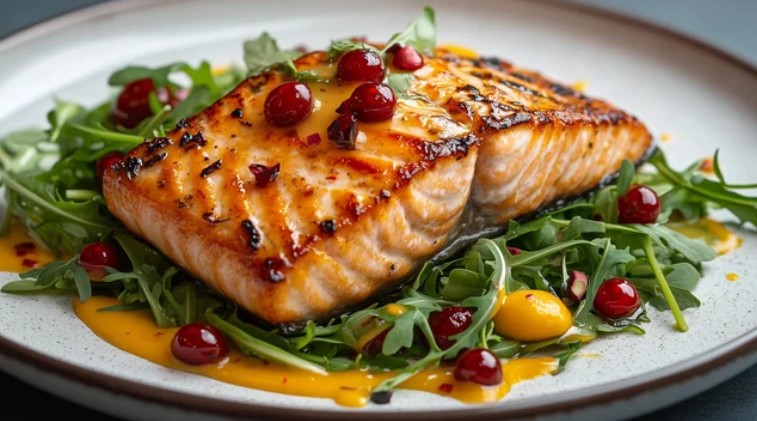
How to Include Cranberries in Your Diet
Simple Ideas
Add fresh cranberries to smoothies
Sprinkle dried cranberries over oats or salads (choose unsweetened)
Use cranberry purée in yoghurt bowls
Brew cranberry tea
Pairings
Oranges and apples (for sweetness)
Cinnamon and ginger (for extra antioxidants)
Walnuts and seeds (adding healthy fats to enhance nutrient absorption)
Juices and Concentrates
Choose unsweetened juice or 100% concentrate — many supermarket versions contain added sugar.
Fresh vs Dried vs Supplements
Fresh or frozen – highest nutrients with a tart flavour
Unsweetened dried – convenient, but watch the portion size
Juice – good for UTI support (make sure it’s sugar-free)
Proanthocyanidin (PAC) supplements – make sure to take clinically effective doses, and look for standardised (precisely measured) PACs.
Cooking Considerations
Heat can reduce vitamin C content, but the polyphenols remain stable. Quick stewing or using them in chutneys preserves most benefits.
Scientific Backing
Several high-quality studies support the health benefits of cranberries:
Urinary Tract Health
A 2023 Cochrane review of 50 studies and 8,857 participants found that cranberry consumption significantly reduces the risk of recurrent UTIs, particularly in women and children.
Williamson et al., Cochrane Database Syst Rev, 2023.
Cardiovascular Health
A randomised controlled trial found that consuming 100g equivalent of cranberries daily improved endothelial function — an indicator of vascular health — within 1 month.
Borges et al., Food & Function, 2020.
Gut Microbiome Benefits
Research shows that cranberry polyphenols increase beneficial gut bacteria while suppressing harmful species.
Liu et al., Journal of Agricultural and Food Chemistry, 2021.
Antioxidant & Anti-inflammatory Activity
Studies demonstrate reductions in oxidative stress markers following cranberry intake.
Saeed et al., Nutrients, 2022.
Key Takeaways
Cranberries are a nutrient-dense berry rich in antioxidants, fibre and unique A-type proanthocyanidins that support urinary, cardiovascular and immune health. Research strongly supports their ability to reduce UTI recurrence, and emerging studies highlight gut-microbiome benefits. For maximum nutrition, opt for fresh, frozen or unsweetened dried berries, and enjoy them regularly as part of a balanced, plant-rich diet.
Recommended Products

References/Sources
- Blumberg J.B. et al. (2013)
Cranberries and Their Bioactive Constituents in Human Health.
Advances in Nutrition, 4(6), 618–632.
https://doi.org/10.3945/an.113.004473 - Fu Z. et al. (2023)
Oral D-Mannose vs Cranberry Products for Prevention of Recurrent Urinary Tract Infections.
American Journal of Obstetrics & Gynecology.
https://pubmed.ncbi.nlm.nih.gov/36855933/ - Liska D. et al. (2016)
Effect of Cranberry Polyphenols on Gut Microbiota Composition and Cardiometabolic Risk Biomarkers.
Journal of Nutrition, 146(12), 2574–2581.
https://doi.org/10.3945/jn.116.234716 - Howell A.B. (2002)
Cranberry Proanthocyanidins and Prevention of Adhesion of E. coli to Urinary Tract Epithelium.
New England Journal of Medicine.
https://www.nejm.org/doi/full/10.1056/NEJM199810153391600 - McKay D., Blumberg J. (2007)
A Review of the Bioactivity of Cranberry.
Journal of the Science of Food and Agriculture, 87(12), 2182–2192.
https://doi.org/10.1002/jsfa.2973 - Cohen E. et al. (2022)
Cranberry Extract and Recurrent Urinary Tract Infections: A Systematic Review & Meta-Analysis.
BMC Urology, 22(1). https://doi.org/10.1186/s12894-022-00992-4 - Harvard School of Public Health — Cranberries
Nutrition & health profile.
https://www.hsph.harvard.edu/nutritionsource/food-features/cranberries/ - U.S. Department of Agriculture (USDA) FoodData Central
Raw cranberry nutrition data (per 100g).
https://fdc.nal.usda.gov/fdc-app.html#/food/170182 - Cleveland Clinic — Cranberries & UTI Health
Medical breakdown of cranberry benefits.
https://health.clevelandclinic.org/cranberry-juice-for-uti/ - Li, William. (2019)
Eat to Beat Disease: The New Science of How Your Body Can Heal Itself.
Penguin Books.